
- News & Events
- Notice & Announcement
News & Events
News & Events
At RUC, Gen Z from Around the World Explore How to Tell China’s Story
2025-11-20Last November, more than 60 international students from across Asia, Europe, Africa and the Americas gathered at Renmin University of China (RUC) to take part in the first Gen Z International Communication Training Camp, seeking new ways to tell China’s story in the age of new media.
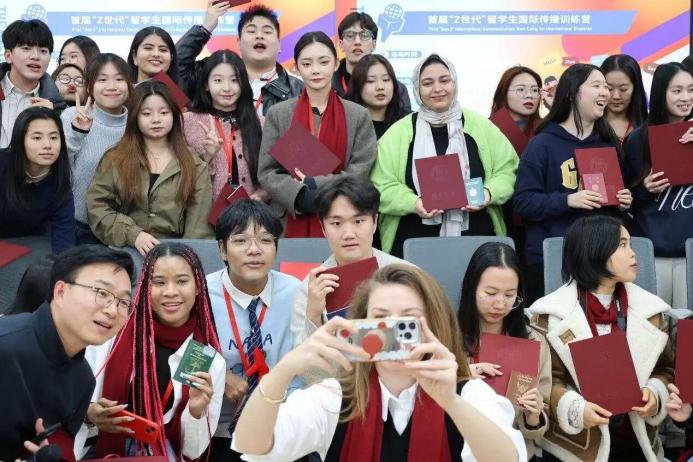
The first Gen Z International Communication Training Camp.
Under the theme “Encounter of Cultures”, the program focused on how young people can approach China from their own perspectives and use storytelling, visual expression and cross-cultural communication to present a more complete and nuanced picture of the country.
Organized by the School of Journalism and Communication, the training camp is part of RUC’s effort to cultivate international communication talent. It also serves as an open, practice-oriented platform to foster a new generation of global communicators capable of understanding China, explaining it to global audiences, and navigating cultural differences with confidence.
01 Opening: Youth Perspectives Spark Cultural Exchange
The training camp began on the morning of Nov. 15. Dong Chenyu, an associate professor at the School of Journalism and Communication, hosted the opening session, while Yan Yan, deputy secretary of the school, delivered welcoming remarks.
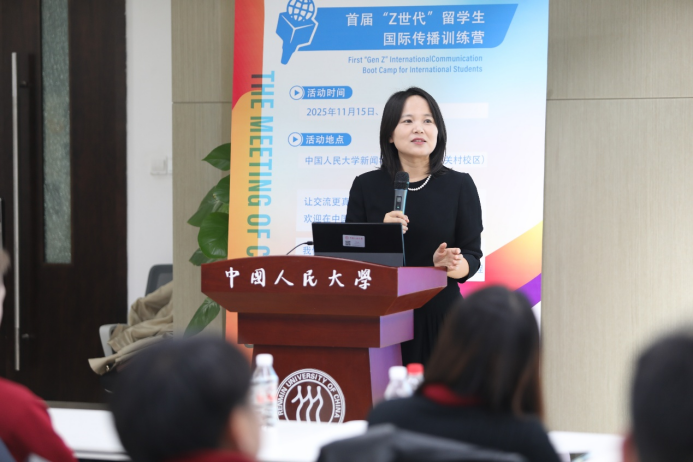
Yan Yan, deputy secretary of the School of Journalism and Communication, delivered opening remarks at the training camp.
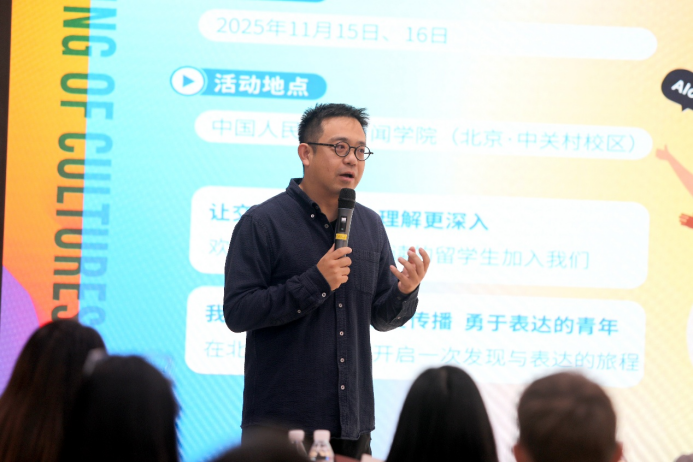
Dong Chenyu, associate professor at the School of Journalism and Communication, hosted the opening session
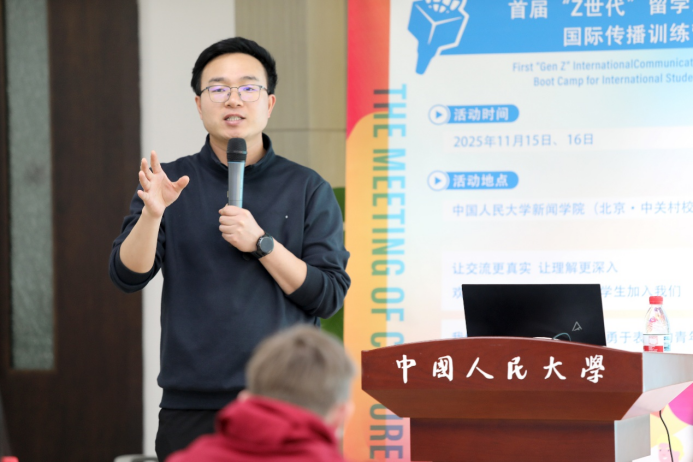
Zhou Xiaohui, a lecturer at the School of Journalism and Communication, introduced the International Communication Co-creation Program.
Zhou Xiaohui, a lecturer at the school, invited participants to join the Gen Z International Co-creation Program, where creative platforms and institutional resources are available for youth-driven storytelling.
During the self-introduction session, participants from over 40 countries shared their reasons for coming to China with confidence and openness, switching between Chinese and English with different accents.
Driven by curiosity and enthusiasm, some were eager to produce documentaries, others showed their interest in Chinese cuisine or history, while several cited curiosity sparked by images of everyday life shared by Chinese youngsters on social media. The discussion was filled with personal stories and reflections on China’s culture and development, creating a relaxed and lively atmosphere.
02 Themed Sessions: Pathways to Cross-Cultural Content Creation
The curriculum of the camp was closely aligned with emerging trends in international content production.
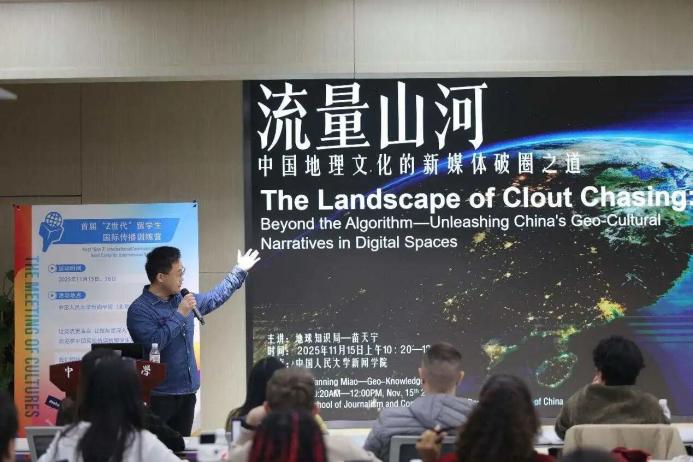
Miao Tianning, a content creator from the popular geography-focused media account Earth Knowledge Bureau, delivered a lecture themed “The Landscape of Clout Chasing: Beyond the Algorithm-Unleashing China's Geo-Cultural Narratives in Digital Spaces”, using data and cases to explain how Chinese geographic and cultural narratives have gained traction on the internet.
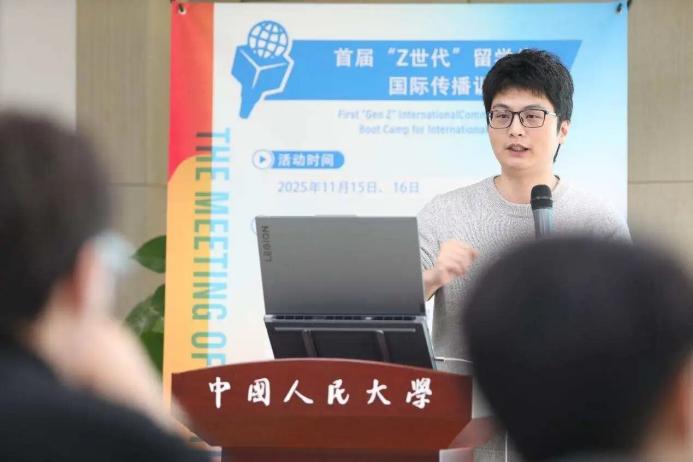
The second session addressed technological change and creative innovation. Documentary director and AIGC content creator Luo Chong shared his storytelling experience in the age of artificial intelligence. “Technology cannot replace reality,” he told students, “but it can amplify it.”
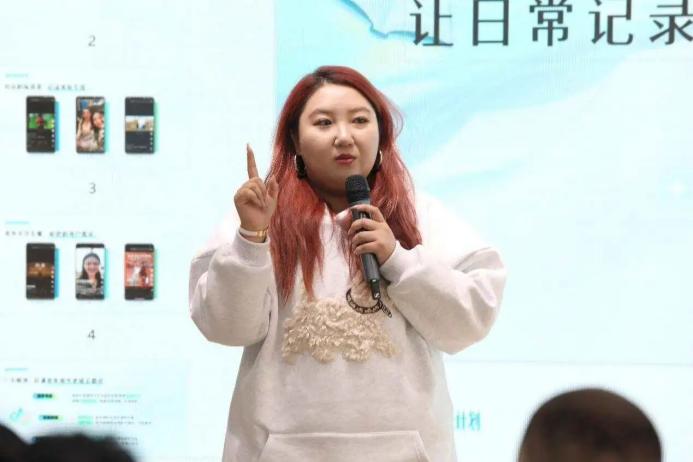
Zhang Libo, an expert in TikTok operations, drew on campus-based case studies to address common challenges in managing social media accounts, encouraging students to turn ordinary daily experiences into culturally resonant stories.
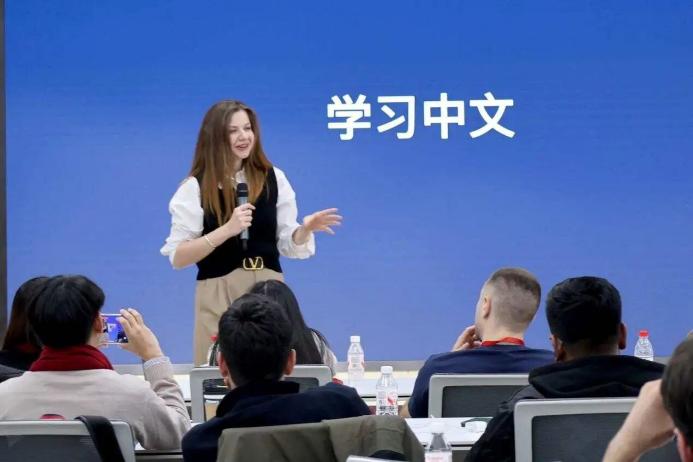
The final session, From China to the World: Cross-Cultural Narratives for Global Audiences, was led by cross-cultural media professional Justyna Szpakowska. Drawing on her experience working with cultural institutions, embassies and media organizations, she discussed how to make stories understandable across cultural boundaries and emphasized the importance of dialogue in international communication.
Throughout the sessions, students actively asked questions, shared their cultural observations, and exchanged perspectives, collectively exploring new approaches to telling China’s story in a global context.
03 International Collaboration: Co-Creating Content Along the Beijing Central Axis
During the event, international participants from the camp teamed up with undergraduate and graduate students from RUC’s School of Journalism and Communication to form seven mixed-nationality creative groups. These teams conducted fieldwork at iconic sites along the Beijing Central Axis: the Forbidden City, Temple of Heaven, Jingshan Park, Imperial Academy, Confucius Temple, Earth Altar, and Temple of Agriculture. Drawing on classroom learning, participants created new media works—including short videos and photo-text pieces—by blending international perspectives with local narratives.
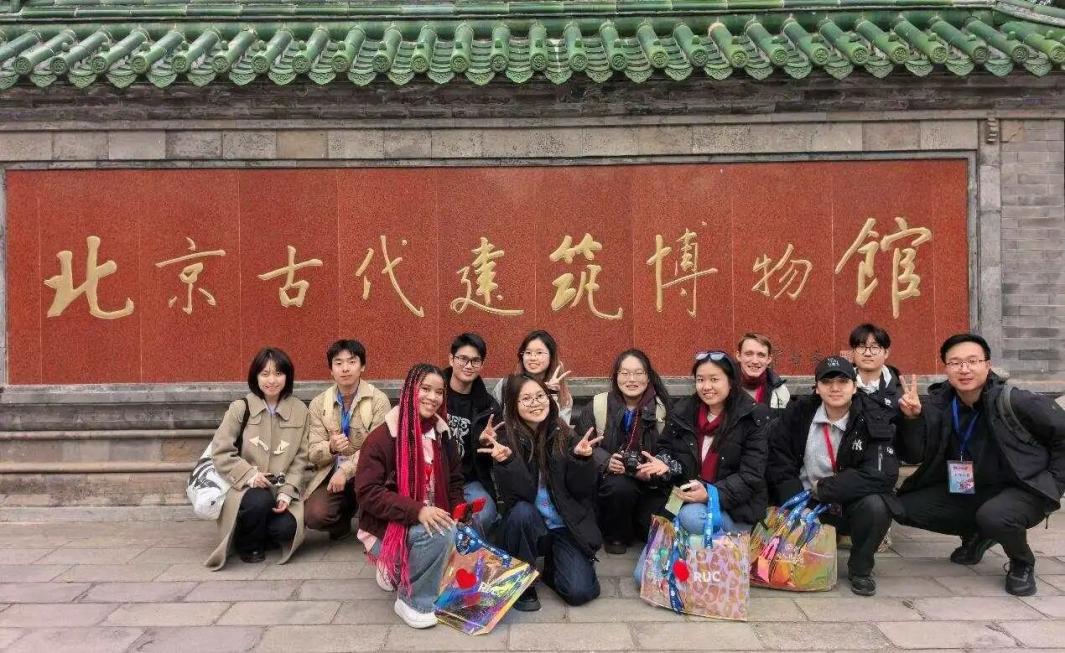
Following the creation activity, students showcased their collaborative works. Lecturer Wang Huiyi from the School of Journalism and Communication hosted the exhibition, reintroducing the World Heritage-listed “Beijing Central Axis” to international participants. Seven groups of Chinese and international students presented multiple high-quality new media works, sharing their creative concepts and amusing anecdotes from the collaborative process.
The formats included short videos, thematic photography, and hand-drawn animations, offering both grand historical perspectives and vivid observations of local streets and alleys. Laughter and applause frequently filled the venue during the screening.
ASADPOUR SHAGHAYEGH (Yu Han), an Iranian student from Yunnan University’s School of Journalism, remarked at the Xiannongtan Ancient Architecture Museum: “Chinese culture isn’t something distant and lofty—it’s part of everyday life. I hope more people will come to experience China's rich heritage firsthand and make more Chinese friends.”
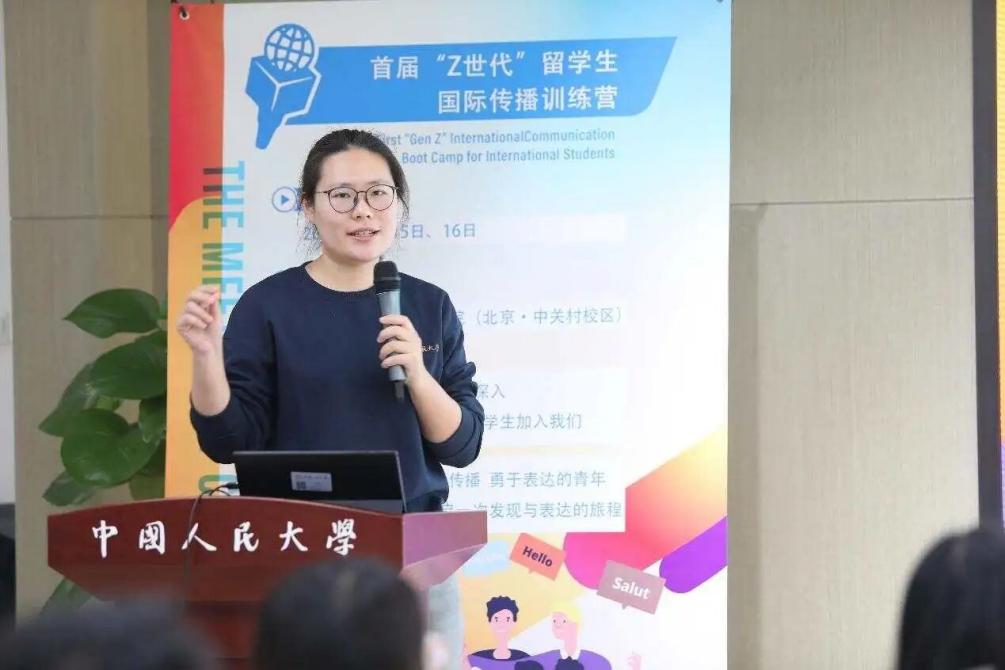
Lecturer Wang Huiyi from the School of Journalism and Communication hosted the showcase of co-created content.
04 The Journey Continues: Looking forward to more Gen Z creators
With the presentation of certificates, the training camp concluded, and participants gathered for a group photo.
Moving forward, the School of Journalism and Communication at RUC will continue to host the Gen Z International Communication Training Camp. In collaboration with peer institutions, it will establish a long-term co-creation platform to invite more young international students to join.
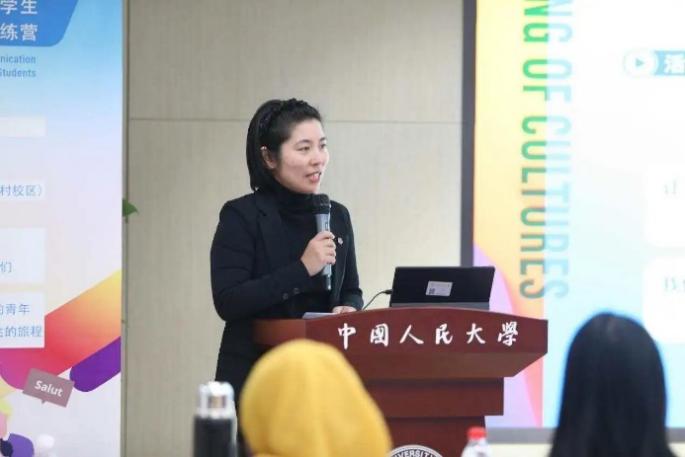
Zhao Jin, Foreign Affairs Secretary of the Office of International Cooperation and Exchange, presided over the awarding of completion certificates.
The story continues, and new encounters await. We look forward to welcoming the next gathering of global youth at RUC.
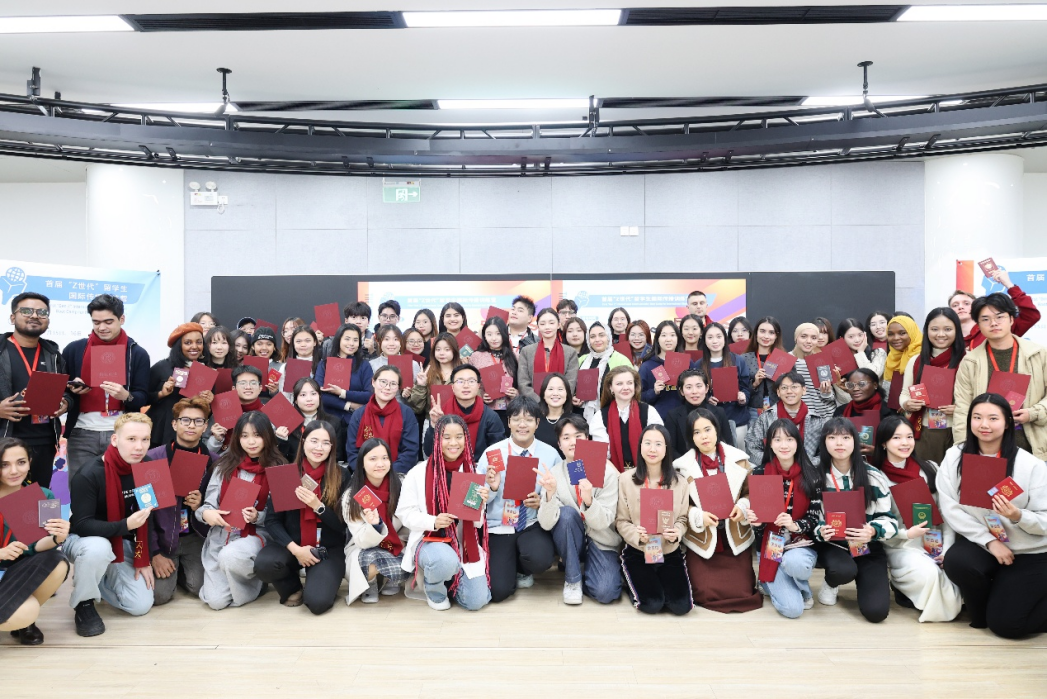
Welcome to the Gen Z International Communication Co-creation Program at the School of Journalism and Communication, Renmin University of China. Chinese and international students from all universities are welcome to join.
Please scan the QR code to fill out the registration questionnaire.

For more content, please follow the “Walking China” new media account.
For inquiries about the Co-creation Program, please add WeChat: ruc_gogogo.
Translator:Chen Siyang, Zhao Zhiqiao
Editor:
